


Hiring your first employee is a big milestone for any UAE business. It also brings new legal, payroll and administrative responsibilities. From the employment contract and work permit to salary processing through the Wage Protection System (WPS), you need the right...
UAE E-Invoicing Guide 2026: Everything Businesses Must Know to Stay Compliant
Can You Change Your UAE Business Activity Later? Here’s What You Need to Know
Can You Change Your UAE Business Activity Later? When entrepreneurs first set up a company in the UAE, they often focus on launching their business as quickly as possible. However, as businesses grow, services expand, and market opportunities evolve, many owners begin...
UAE Small Business Relief Extended Until 2029: What Businesses Need to Know
UAE Small Business Relief Extended Until 2029 There is an important Corporate Tax update for small businesses operating in the UAE. The UAE Ministry of Finance has extended the period during which Small Business Relief may be claimed to Tax Periods ending on or before...
UAE Content Creator Golden Visa: Who Qualifies in 2026? | Complete Guide
The UAE Content Creator Golden Visa is not based on follower count alone. Learn how different creator profiles—including influencers, YouTubers, journalists, photographers and filmmakers—may qualify through different nomination pathways.
Dubai Flexi Rent Initiative: Everything You Need to Know – “Rent Now, Pay Later” Scheme
Dubai Flexi Rent Initiative: Everything You Need to Know Dubai's rental market is entering a new era. For decades, tenants in Dubai were accustomed to paying rent using one, two, four, or six post-dated cheques—often requiring a substantial amount of money upfront....

Hiring Your First Employee in the UAE? Payroll, WPS & Compliance Checklist
Hiring your first employee is a big milestone for any UAE business. It also brings new legal, payroll and administrative responsibilities. From the employment contract and work permit to salary processing through the Wage Protection System (WPS), you need the right...

Can You Change Your UAE Business Activity Later? Here’s What You Need to Know
Can You Change Your UAE Business Activity Later? When entrepreneurs first set up a company in the UAE, they often focus on launching their business as quickly as possible. However, as businesses grow, services expand, and market opportunities evolve, many owners begin...
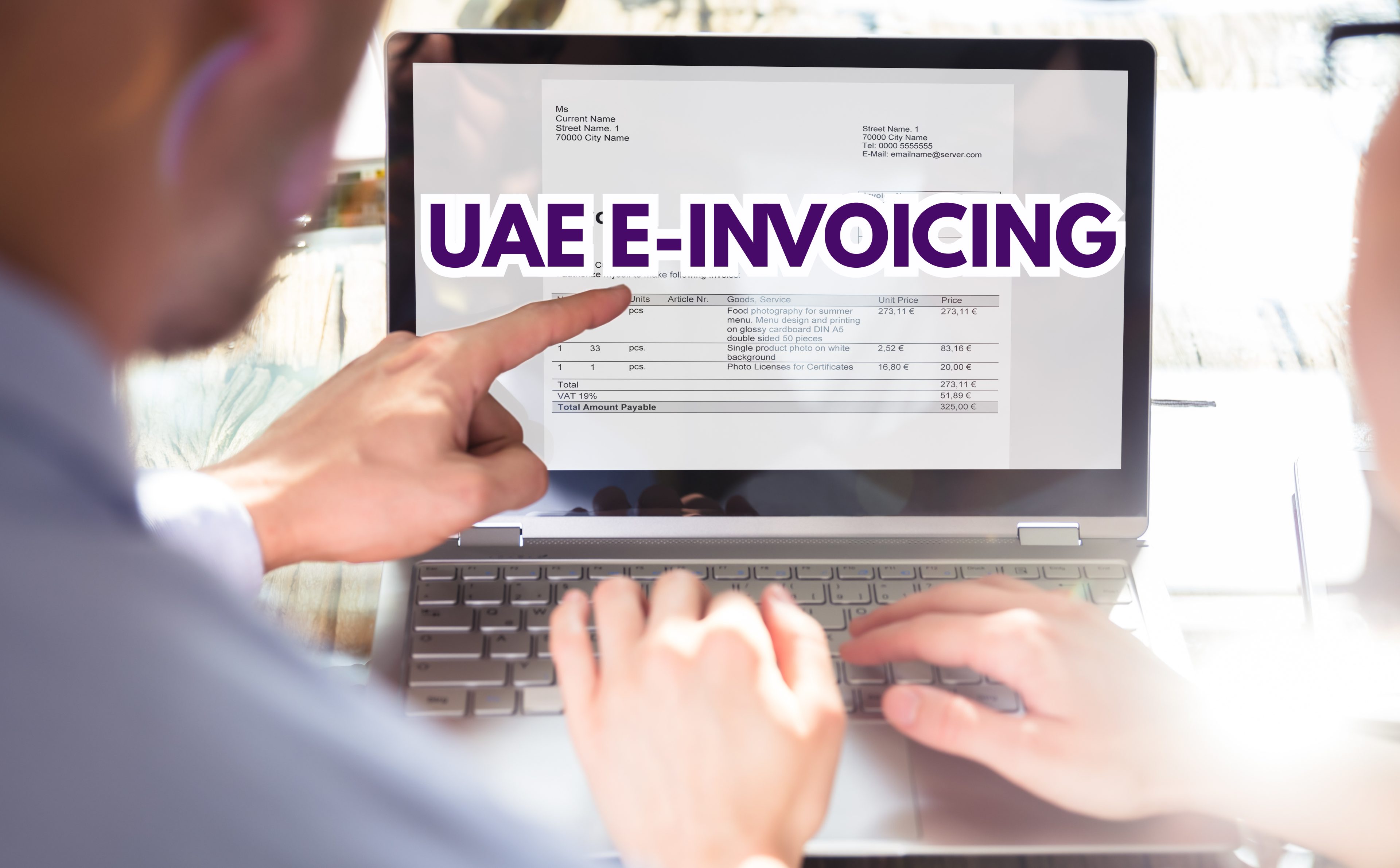
UAE E-Invoicing: What Every Business Owner Needs to Know The UAE is steadily moving towards a fully digital tax and compliance environment and E-Invoicing is one of the most important changes businesses need to prepare for over the next few…
UAE E-Invoicing: What Every Business Owner Needs to Know
The UAE is steadily moving towards a fully digital tax and compliance environment and E-Invoicing is one of the most important changes businesses need to prepare for over the next few years.
While the term “E-INVOICING” may sound technical, its impact will be felt by every business in the UAE, regardless of size or industry. This article explains what UAE E-Invoicing is, why it is being introduced, when it will apply and what business owners should start thinking about now.
What is UAE E-Invoicing?
UAE E-Invoicing is a new way of issuing and receiving invoices where invoices are created in a standard digital format and exchanged electronically through approved systems.
Unlike today’s process, where invoices are commonly issued as PDFs, scanned documents or email attachments, E-Invoices are structured digital records that can be automatically read, validated and reported to the tax authority.
In simple terms:
- An invoice will no longer just be a document you send to your customer.
- It will become a live digital record that is shared, checked and recorded electronically.
PDFs, Word files, scanned invoices or email-only invoices will not qualify as E-Invoices once the system becomes mandatory.
Why is the UAE Introducing E-Invoicing?
The UAE government is introducing E-Invoicing to modernize the tax system and improve accuracy across the economy.
The main objectives are to:
- Reduce VAT errors and incorrect reporting.
- Improve transparency in business transactions.
- Reduce tax evasion and fraud.
- Enable more accurate and faster VAT reporting.
- Reduce manual processes over time for businesses.
Globally, this is not new. More than 80 countries have already implemented E-Invoicing in some form, including Saudi Arabia, India, parts of Europe and Brazil. The UAE is following international best practices while designing a system suited to its business environment.
Who Will UAE E-Invoicing Apply To?
UAE E-Invoicing will apply broadly across the business community. It applies to all businesses in the UAE, whether VAT registered or not.
The initial focus is on:
- Business-to-Government (B2G) transactions
- Business-to-Business (B2B) transactions
Some transactions, such as Business-to-Consumer (B2C) invoices, are currently excluded in the early phases. However, this exclusion is temporary and may change in the future.
When Will E-Invoicing Be Implemented in the UAE?
E-Invoicing will be introduced in phases, rather than all at once.
Based on the current announcements:
- Large businesses will be required to comply first
- Small and medium-sized businesses (SMEs) will follow in later phases
- Government entities will also be included under separate timelines
Specific deadlines and thresholds are being issued gradually by the authorities and more detailed guidance is expected as implementation approaches.
It is recommended to take early action as businesses that wait until the last minute may face operational pressure when deadlines are announced.
What Do Business Owners Need to Do to Stay Compliant?
E-Invoicing is not just a tax change, it is also a process and systems change. Business owners should start preparing in a practical and structured way.
Businesses should:
- Understand how invoices are currently issued (manual, accounting software, ERP, etc.)
- Ensure that invoice data is accurate, complete and consistent.
- Be ready to use an Accredited Service Provider (ASP) when mandated.
- Ensure invoices are issued on time and correctly.
- Stay updated, as requirements and timelines will continue to evolve.
The key is awareness and readiness, not immediate system overhauls.
What Happens If Businesses Don’t Prepare?
Once E-Invoicing becomes mandatory:
- Incorrect or incomplete invoices may be rejected.
- VAT recovery may be delayed.
- Day-to-day operations may be disrupted.
- Compliance risks and penalties may increase.
Early awareness allows businesses to plan calmly rather than react under pressure.
Frequently Asked Questions (FAQs)
Q. Is E-Invoicing mandatory right now in the UAE?
A. No, E-Invoicing is not yet mandatory for all businesses. It will be introduced in phases, with specific timelines announced by the authorities.
Q. Will PDFs and email invoices still be allowed?
A. Once E-Invoicing becomes mandatory for a business, PDFs and email invoices will no longer qualify as valid E-Invoices.
Q. Does this apply to businesses that are not VAT registered?
A. Yes, UAE E-Invoicing applies to all businesses, regardless of their VAT registration status.
Final Thoughts
UAE E-Invoicing is a major shift in how businesses issue and manage invoices.
It is not something to panic about but it is also not something to ignore.
Businesses that understand the change early will transition smoothly. Those who delay may face unnecessary operational challenges.
How Can Bizzmosis Help?
At Bizzmosis, we are closely monitoring all official UAE E-Invoicing developments and announcements.
Our role is to:
- Help businesses understand how E-Invoicing applies to them.
- Explain timelines and obligations in simple, practical terms.
- Support businesses with readiness assessments and guidance.
- Keep clients informed as new rules and clarifications are issued.
This first article is focused on awareness. As the authorities release further clarity, we will share more detailed guidance tailored to different business types.
📩 If you would like guidance or wish to receive updates as the authorities release further clarity, feel free to reach out to us at Bizzmosis.
📞 +971 52 979 8169 | 📧 hello@bizzmosis.com


0 Comments