


If you're planning to manufacture, import, or distribute products in the UAE, you've probably come across the terms ECAS and EQM. Many businesses mistakenly assume they are the same certification, or that obtaining one automatically satisfies all regulatory...
Halal Certification for Imported Food Products in the UAE: What Businesses Need to Know
Hiring Your First Employee in the UAE? Payroll, WPS & Compliance Checklist
Hiring your first employee is a big milestone for any UAE business. It also brings new legal, payroll and administrative responsibilities. From the employment contract and work permit to salary processing through the Wage Protection System (WPS), you need the right...
Can You Change Your UAE Business Activity Later? Here’s What You Need to Know
Can You Change Your UAE Business Activity Later? When entrepreneurs first set up a company in the UAE, they often focus on launching their business as quickly as possible. However, as businesses grow, services expand, and market opportunities evolve, many owners begin...
UAE Small Business Relief Extended Until 2029: What Businesses Need to Know
UAE Small Business Relief Extended Until 2029 There is an important Corporate Tax update for small businesses operating in the UAE. The UAE Ministry of Finance has extended the period during which Small Business Relief may be claimed to Tax Periods ending on or before...
UAE Content Creator Golden Visa: Who Qualifies in 2026? | Complete Guide
The UAE Content Creator Golden Visa is not based on follower count alone. Learn how different creator profiles—including influencers, YouTubers, journalists, photographers and filmmakers—may qualify through different nomination pathways.
ECAS vs EQM: Which Certification Does Your Product Need in the UAE?
If you're planning to manufacture, import, or distribute products in the UAE, you've probably come across the terms ECAS and EQM. Many businesses mistakenly assume they are the same certification, or that obtaining one automatically satisfies all regulatory...

Hiring Your First Employee in the UAE? Payroll, WPS & Compliance Checklist
Hiring your first employee is a big milestone for any UAE business. It also brings new legal, payroll and administrative responsibilities. From the employment contract and work permit to salary processing through the Wage Protection System (WPS), you need the right...
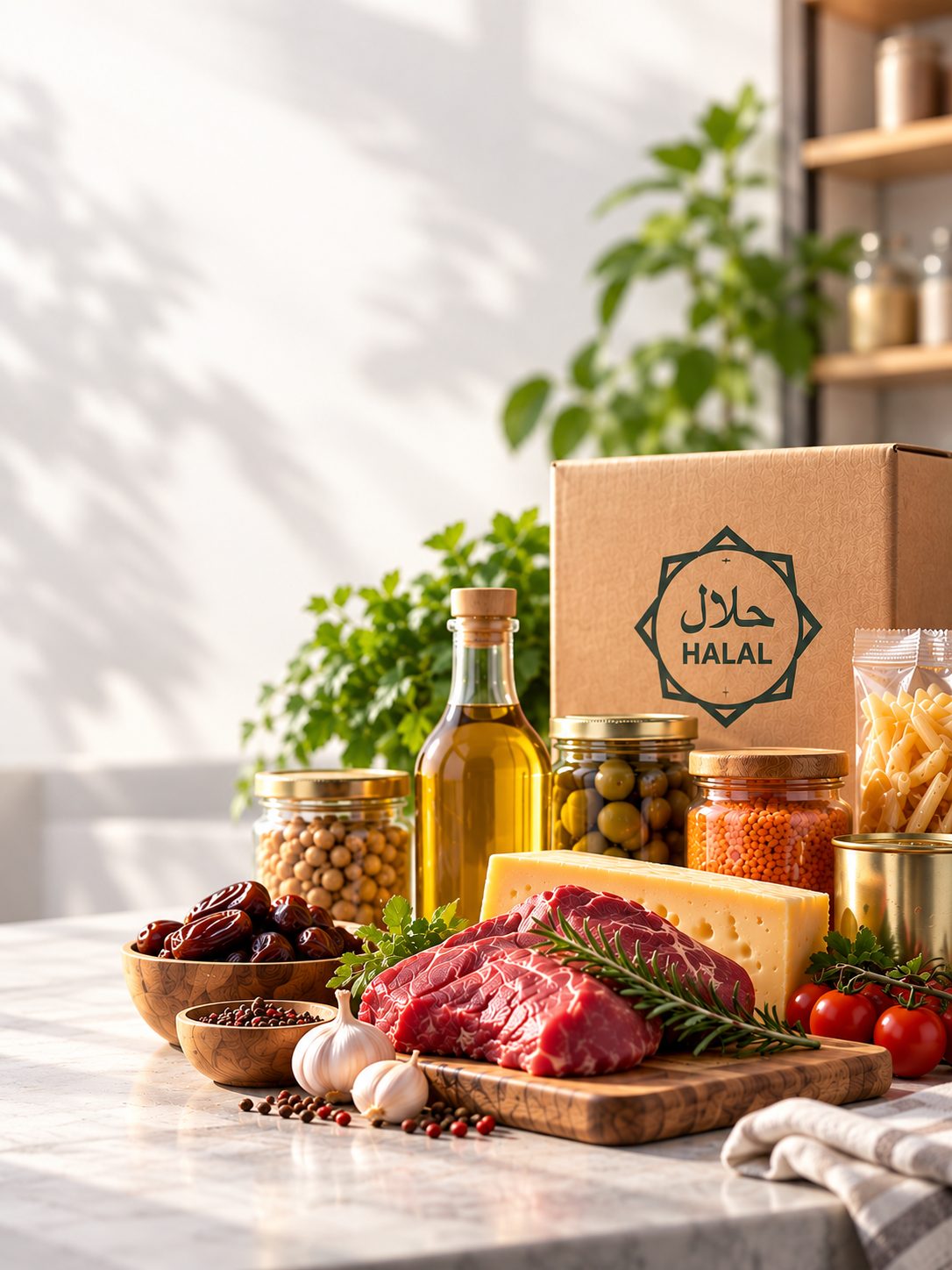
A halal certificate from your home country isn’t automatically valid in the UAE. Here’s what food importers need to check before shipping.
Importing food products into the UAE involves much more than shipping goods and finding a distributor. Before products can enter the market, manufacturers, importers and distributors need to understand the UAE’s requirements for halal certification, ingredients, product registration, labelling and other regulatory approvals.
One particularly important area is halal certification.
A common assumption among international manufacturers is that having a halal certificate from the country of origin automatically means the product is ready for the UAE market.
That is not necessarily the case.
The UAE operates its own halal control framework, overseen by the Ministry of Industry and Advanced Technology (MoIAT). Where halal certification is required, businesses need to ensure that the certification and certification body meet the applicable UAE requirements.
What Is Halal Certification?
Halal certification provides assurance that applicable products, ingredients, manufacturing processes and, where relevant, slaughtering procedures comply with approved halal requirements.
Under the UAE System for Control of Halal Products, applicable establishments are required to obtain halal certificates for final products and raw materials from Halal Certification Bodies registered with MoIAT.
This makes it important to assess not only the finished product, but also the ingredients and production process behind it.
Which Products Should Businesses Assess for Halal Requirements?
The applicable requirements depend on the nature and composition of the product.
Particular attention may be required for products such as:
- Meat and poultry
- Processed and frozen meat products
- Foods containing animal-derived ingredients
- Dairy products with animal-derived components
- Ready-to-eat meals
- Gelatin-containing products
- Animal fats and oils
- Certain additives and flavourings
- Enzymes, emulsifiers and processing aids
For manufacturers, the ingredient list is therefore a critical part of the compliance review.
A product that appears straightforward may contain an ingredient or processing aid that requires further assessment.
Is an Overseas Halal Certificate Accepted in the UAE?
This is one of the most important questions for international manufacturers.
An overseas halal certificate should not simply be assumed to satisfy UAE requirements.
Where certification under the UAE halal system is required, businesses should verify whether the Halal Certification Body is currently registered with MoIAT and whether its scope covers the relevant products or activities.
MoIAT maintains an official list of registered Halal Certification Bodies from multiple countries.
This should ideally be checked before production and shipment, rather than once the goods have already reached the UAE.
What Is the UAE Halal National Mark?
The UAE Halal National Mark is administered by MoIAT and may be granted to qualifying products, services or production systems that demonstrate compliance with applicable halal requirements.
It provides a nationally recognised indication of conformity with the UAE’s halal framework and applicable standards.
Importantly, the Halal National Mark should not be confused with the underlying halal certification requirements. Businesses should determine which requirements apply specifically to their products and market-entry structure.
5 Common Mistakes Food Importers Should Avoid
1. Assuming Any International Halal Certificate Will Be Accepted
Having a halal certificate is not necessarily enough.
Businesses should verify whether the issuing certification body is recognised and registered under the UAE system for the applicable scope.
2. Reviewing Only the Finished Product
Halal compliance can extend beyond the product name or primary ingredient.
Gelatin, enzymes, emulsifiers, flavourings, animal fats, processing aids and other components may need to be assessed.
A complete ingredient and manufacturing review can identify potential issues before they become expensive problems.
3. Starting Compliance After the Shipment Has Left
Regulatory preparation should begin before shipment.
Discovering certification, documentation or labelling issues after goods have arrived can create unnecessary delays, additional costs and disruption to a planned product launch.
4. Overlooking UAE Labelling Requirements
Halal compliance does not eliminate other food regulatory requirements.
Product labels must also comply with the applicable UAE requirements. Businesses should therefore review labels before printing large quantities of packaging intended for the UAE market.
5. Treating Halal Certification as the Entire Approval Process
Halal certification may be only one part of bringing a food product to market.
Depending on the product and where it will be marketed, additional requirements may include:
• Food product registration • Label assessment • Relevant municipality procedures • Product conformity requirements • Supporting technical documentation • Other product-specific regulatory approvals
The correct pathway should therefore be determined based on the individual product rather than applying a one-size-fits-all approach.
Why Early Compliance Planning Matters
For international food manufacturers, compliance is not simply an administrative step at the end of the supply chain.
It is part of the market-entry strategy.
Reviewing requirements early can help businesses identify certification gaps, prepare documentation, adjust labels and address ingredient concerns before commercial commitments and shipments are made.
This can reduce the risk of preventable delays and make the UAE market-entry process considerably more efficient.
Before Importing Food Products into the UAE
Businesses should consider the following before shipment:
- Determine whether the product falls within applicable UAE halal requirements.
- Verify the status and relevant scope of the Halal Certification Body.
- Review the complete ingredient composition, including animal-derived ingredients and processing aids.
- Assess labels against applicable UAE requirements.
- Prepare supporting certificates and technical documentation in advance.
- Identify any product registration or additional regulatory approvals required.
- Resolve compliance questions before manufacturing UAE-specific packaging or shipping commercial quantities.
FAQs
Is a halal certificate from another country valid in the UAE?
Not automatically. Where UAE halal certification applies, the certificate must be issued by a Halal Certification Body registered with MoIAT, and its registered scope must cover the relevant products or activities.
Who regulates halal certification in the UAE?
The Ministry of Industry and Advanced Technology (MoIAT) oversees the UAE System for Control of Halal Products and maintains the official list of registered Halal Certification Bodies.
Do raw materials and ingredients need halal certification too?
Under the UAE system, applicable establishments need halal certificates for both final products and raw materials. Ingredients such as gelatin, enzymes, emulsifiers, flavourings and animal fats may need specific assessment.
What is the difference between halal certification and the UAE Halal National Mark?
Halal certification confirms a product meets applicable halal requirements. The UAE Halal National Mark, administered by MoIAT, is a separate national mark that may be granted to qualifying products, services or production systems.
Is halal certification the only approval needed to sell food in the UAE?
No. Depending on the product and emirate, you may also need food product registration, label assessment, municipality procedures, conformity requirements and supporting technical documentation.
When should I start the halal compliance process?
Before manufacturing UAE-specific packaging or shipping commercial quantities. Fixing certification or labelling issues after goods arrive usually means delays and extra cost.
Key Takeaway
The most important lesson for international food businesses is simple:
Do not assume that a product that is halal-certified elsewhere is automatically ready for the UAE market.
The certification body, ingredients, manufacturing process, documentation, labelling and wider product-registration requirements may all need to be considered.
Addressing these matters before shipment can help businesses avoid costly corrections and build a stronger route to market.
How Bizzmosis Can Help
Entering the UAE food market can involve multiple authorities, technical requirements and approval processes.
Bizzmosis supports food manufacturers, importers, distributors and retailers in understanding and navigating the regulatory requirements applicable to their products.
Our support may include assessing halal certification requirements, reviewing the regulatory pathway, coordinating with relevant recognised certification bodies, supporting product registration and label reviews, and liaising with the appropriate UAE authorities.
Planning to import food products into the UAE?
Before you manufacture UAE-specific packaging or arrange your first shipment, speak with our team.
Send Bizzmosis a DM with “HALAL” together with your product category and country of origin.
Our team can review your inquiry and advise on the applicable regulatory pathway and next steps for entering the UAE market.
Prepare first. Ship second. Enter the UAE market with a clearer compliance strategy.


0 Comments